Cleaning Pavers Inside a Screen Enclosure: Define the Work Area First
Plan paver cleaning inside a screen enclosure: define floor boundaries, frame protection, door access, pool precautions and a dry appearance review.
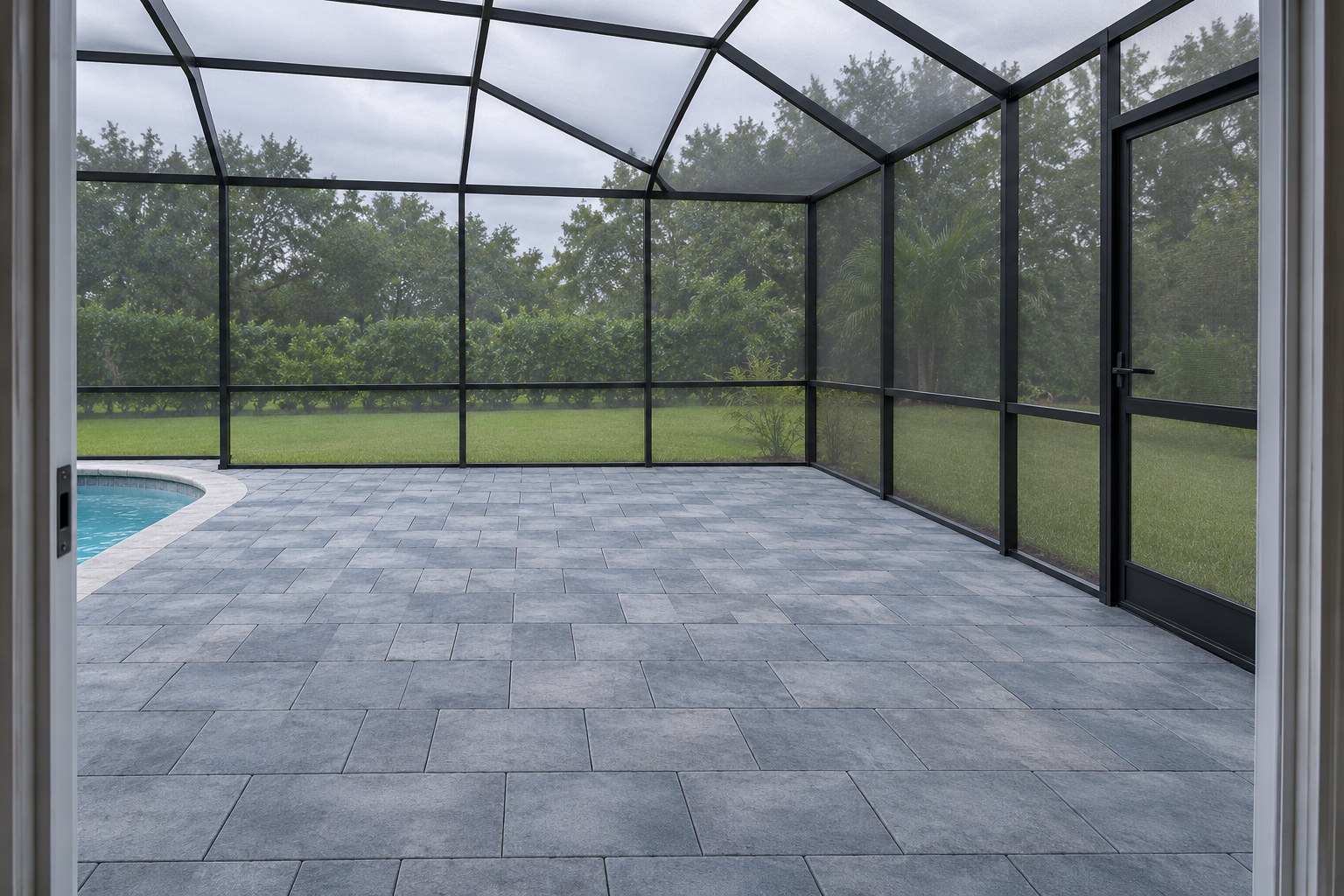
AI illustration of pavers inside a screen enclosure, not a completed project or an installation detail.
Before cleaning pavers inside an existing screen enclosure, agree which floor surfaces are included and where work stops at screens, frames and door tracks. The proposal should name exclusions, protection responsibilities, the access route and a water management assessment. Include a professional test area and a review of the dry appearance. Record visible concerns without disturbing the enclosure. If its condition prevents safe access, have the relevant trade assess that concern before scheduling the affected work.
For paver cleaning and sealing in Boynton Beach, the starting point is a site assessment of the proposed area. The enclosure’s footprint alone does not describe everything the cleaning proposal needs to cover.
Trace the floor boundary around the fixed frame
Use an overview photograph or sketch to identify the open pavers, the narrow perimeter beside the lower frame rails and each doorway. Give the contractor enough context to distinguish a mark on the floor from discoloration on the metal above it. Include any different border or threshold material in the description.
Ask for the treatment boundary to be shown at the frame bases. Where pavers extend beneath a fixed component, the proposal should identify what remains inaccessible and untreated. Nothing in a floor-cleaning agreement should imply lifting rails, removing anchors or modifying the enclosure to reach beneath it.
Doorways need separate attention. Identify whether the included pavers stop at the inside threshold or continue through the opening. Screen mesh, frame finishes, hardware and door tracks should have explicit exclusions from paver cleaning. A door track appearing in a condition photograph does not make track cleaning part of the job.
Have the same boundary appear in the estimate and the work instructions. That lets the person supervising the crew understand the agreement without relying on a conversation held during the initial visit.
Record concerns without testing the structure
Photograph visible scratches, damaged mesh, deteriorated finishes or gaps around the lower frame from an accessible position. Describe what is visible and where it is. Avoid guessing whether a mark is corrosion, residue or an installation defect. Share any existing door-operation concerns without forcing the door or probing a questionable connection.
CMHA’s Operation and Maintenance Guide for Interlocking Concrete Pavement separates routine maintenance from assessment of surface distress, including settlement and damaged units. It supports checking the pavers’ condition; it is not an authority on screen enclosure design.
If a frame, doorway or other feature prevents safe access, the relevant enclosure or door trade needs to assess it. Keep that unresolved area out of the scheduled cleaning work until access is settled. Recording an existing concern is documentation, not a structural inspection or permission to disturb it.
Plan the route through the enclosure
Agree which entrance the crew will use and how the route reaches every included section. Have the contractor review the available opening and threshold with the proposed equipment in mind. Do not assume that a screen panel or door will be removed to create access.
List furniture and movable items separately from fixed features. Assign who moves each item, where it will be stored and who returns it after the surface is released for use. Relocating everything into an untreated corner may leave that corner unavailable if it is later added to the scope.
Also settle household access during the work. Identify any doorway residents need to use and the contact who will confirm changes. If a pool service provider needs the same route, coordinate the visits before fixing the cleaning schedule.
Assign protection and assess water movement
The protection discussion should follow the enclosure’s perimeter: lower rails, screen panels, door finishes and tracks, then the pool edge and nearby equipment. Name who provides, checks and removes any proposed temporary protection. Have the contractor explain unresolved compatibility questions involving adjacent finishes before approving exposure to the work.
For a broader inventory, our guide to protecting surroundings before paver cleaning covers neighboring surfaces. Inside an enclosure, bring the discussion back to fixed frame bases and doors that remain in place throughout the job. Listing them as excluded from cleaning still leaves protection responsibilities to assign.
Have the contractor assess where cleaning water could travel and how it will be managed. Point out existing drains, low areas, door thresholds, the pool and equipment access. Report water movement you have actually seen during ordinary use; do not create a water test yourself. A visible drain or an open door does not establish an acceptable destination for cleaning water.
Pool chemistry, equipment servicing and electrical work are outside this paver-cleaning scope. If the assessment identifies a concern requiring one of those trades, name who arranges the review and what work depends on it. Leave the affected work pending until the responsibility and next step are clear. A protection plan should describe the proposed precautions and limitations without promising zero damage.
Agree on the trial and the appearance review
CMHA’s Cleaning, Sealing and Joint Sand Stabilization of Interlocking Concrete Pavement recommends identifying stains, selecting cleaners suited to concrete pavers and evaluating a small, inconspicuous trial. Experienced professionals should handle most cleaning work.
Bring available surface and previous-treatment records to the assessment. Unknown information should stay marked as unknown. An enclosure does not identify the floor material or establish which treatment is appropriate.
Agree where the trial belongs, who authorizes it and when you will review its dry appearance together. Record remaining marks and any perimeter sections that cannot be reached. Approval of an open section should not silently expand the work to restricted edges. If the result is unacceptable, discuss a revised scope before proceeding.
If sealing is proposed, keep that decision separate. Our guide to approving a paver sealer finish test explains the additional appearance review. A cleaning consultation does not commit you to adding a coating.
Request a consultation through our paver cleaning and sealing service. Send overview photos, available treatment records and notes about doorway access. The next step is an on-site review to identify included pavers, unresolved protection or access questions, and the proposed scope before you approve cleaning.
What the Boynton scope actually establishes
A verified written scope in our Boynton Beach records separates a front walkway from the pool-deck area. It demonstrates that distinct surface areas can be identified separately in project paperwork. It does not establish an enclosure, cleaning, sealing or an outcome, and we are not presenting it as an enclosure-cleaning case.
For your proposal, apply that limited lesson to the floor inside the frame, the doorway transition and any connected exterior pavers. Each area should have an identifiable boundary and approval status. A general reference to the pool deck should not leave those decisions unstated.
Check the proposal before setting the date
Compare the estimate with the marked photograph. Confirm that it records:
- The included pavers and any inaccessible perimeter strips.
- Screen, frame, anchor, hardware and door-track exclusions.
- Protection duties, furniture handling and the agreed access route.
- The water management assessment and any unresolved specialist review.
- The trial location, dry appearance review and approval process.
- Separate decisions for repairs, joint work or optional sealing.
Agree on a pause if the usable doorway, protection or water route differs from the plan. The supervisor should record the concern, explain the proposed response and obtain approval for any scope change before resuming that section. Make this contact arrangement before the visit if you will be away, so a message reporting a problem is not mistaken for permission to expand the work.
At handover, return to the same boundaries and condition photographs, record outstanding concerns, and obtain the contractor’s instructions for resuming surface use and returning furniture. Keep those records with the approved scope.
To plan paver cleaning and sealing in Boynton Beach, request a consultation describing your enclosure layout and access concerns. The next step is a site assessment followed by a written proposal defining the floor area, exclusions, protection responsibilities and review points. Resolve any remaining trade coordination before confirming the affected work.