Soil Washing Onto Pavers: What to Check Before Cleaning
Soil keeps returning to your pavers? Document the pattern, separate deposits from stains, and agree source assessment and cleaning responsibilities.
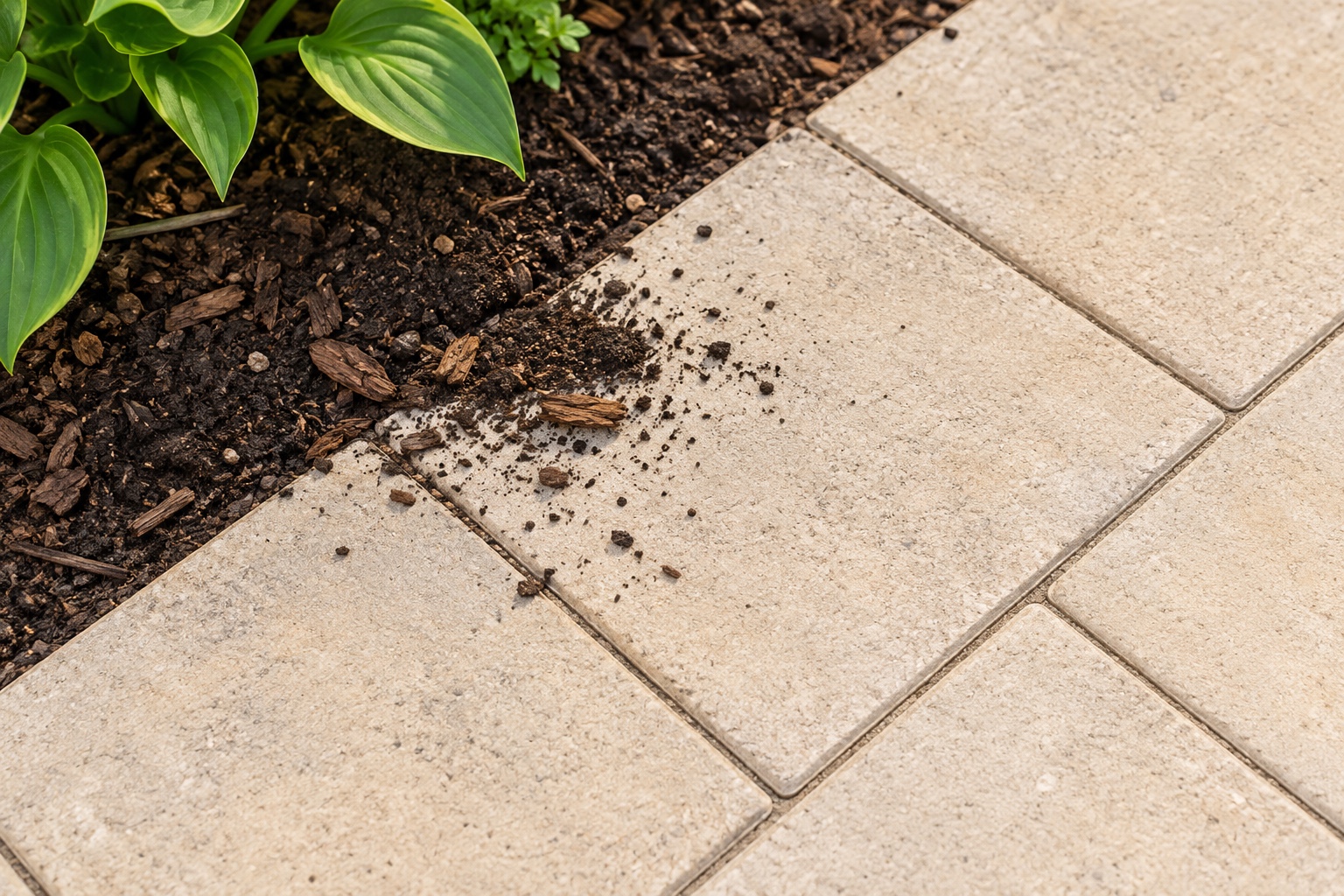
AI illustration of loose soil beside a planting bed, not a completed project or an installation detail.
If soil keeps washing onto your pavers from a nearby planting bed, separate cleaning the deposit already there from assessing why it returns. Document where loose soil or mulch appears after normal rain or irrigation, then have a professional assess the material and possible source. Cleaning can address an assessed deposit without changing the adjacent bed or water route. Whether source assessment should precede, accompany or follow cleaning depends on the conditions found.
For homeowners considering paver cleaning and sealing in Boynton Beach, the useful starting point is a record of what returns and where. A cleaner surface alone cannot establish that the recurring source has been addressed.
Record the return, without recreating it
Keep a simple record during ordinary use of the property. When conditions are safe, photograph the affected edge after rain or a normal irrigation cycle. Include a wider view connecting the bed and pavers, plus a closer view of the loose material. Keep the original photographs together so the location remains recognizable.
Record what you know:
- Location: Name the bed and adjoining surface, such as the planting bed beside the front walk. Mark the affected stretch on a photograph.
- Timing: Note when you noticed the deposit and whether rain, routine irrigation or landscape work had occurred. Separate confirmed events from guesses.
- Appearance: Describe loose grains, clumps or mulch chips without assigning a material or cause that has not been identified.
- Recurrence: Note whether fresh material appeared in the same place after an earlier cleanup, and whether the affected area changed.
Do not run extra irrigation, flood the bed or disturb the joints to reproduce the problem. There is no need to stand outside during rain. If the surface was already cleaned before you could document it, say so. An honest gap in the record is more useful than a reconstructed account.
Separate the deposit from the surface beneath it
Ask the assessing professional whether the material appears to come from the planting bed, runoff from elsewhere or the paver joints. Treat those as possibilities to investigate. A photograph can show where debris collected; it cannot establish the source, the route it took or the condition beneath the pavers.
Loose material, discoloration and coating concerns should remain separate items in the assessment. Not every brown mark is dirt. If a mark remains after the assessed loose deposit is removed, its identity and treatment still need consideration. Likewise, a concern about an existing coating should not disappear from the discussion simply because soil was covering it.
CMHA’s Operation and Maintenance Guide for Interlocking Concrete Pavement treats surface debris removal as routine maintenance and calls for inspection for distress, including settlement. Those are different concerns to assess.
Report movement or unevenness you have already noticed, without walking over a questionable area to test it. A recurring deposit alone does not establish structural damage. Ask what remains uncertain and whether another specialist is needed.
Define what the cleaning proposal actually covers
The paver cleaning and sealing service overview distinguishes cleaning, joint work and sealing. A recurring soil deposit is a reason to clarify which services are appropriate, not an automatic reason to purchase all of them. Ask the proposal to identify the existing deposit being addressed and any remaining marks that need separate evaluation.
Give the affected edge a specific place in the written scope. Name the pavers included, the adjacent bed excluded from treatment and who is responsible for any source assessment. If landscaping, irrigation or drainage work is recommended, identify it as separate work with an appropriate professional. A cleaning agreement should not silently become an agreement to alter the garden or redirect water.
A written Boynton Beach scope lists the front walkway separately from the pool-deck area. That record demonstrates separation of work zones only; it does not establish a sediment, cleaning or sealing job or outcome. The useful principle here is to name each area and responsibility explicitly.
Request a consultation with your location photographs, recurrence notes and any previous treatment records. Ask to arrange a site assessment, then review a written cleaning scope that identifies unresolved source questions and any work requiring another trade before you authorize treatment.
Choose the order of work deliberately
An unresolved source does not mean every cleaning task must wait. Discuss whether the existing deposit can be addressed as a defined maintenance task while a separate assessment proceeds. If that is the agreed approach, record that removing today’s material does not resolve the reason fresh material may arrive later.
Where the professional identifies a condition that affects the proposed cleaning, ask which part of the work depends on resolving it. The answer should identify the affected area and the next decision, rather than leave the entire property under an indefinite hold. Agree who will obtain the specialist’s findings and return them to the cleaning contractor.
If other work is planned beside the pavers, coordinate the sequence before booking final cleaning. Confirm who tells each contractor when the preceding work is ready for review. Avoid assuming that a landscape change has solved the problem before its effect has been assessed.
This separates the decision to remove an existing deposit from the decision to address its recurring source. It also keeps the homeowner from having to design a water-management solution as part of a cleaning request.
Check compatibility before approving treatment
Bring the paver material information and any available sealer, cleaning or installation records. Mark missing history as unknown. Ask the professional what that uncertainty means for the proposed treatment, particularly where a previous coating is present. A product used successfully elsewhere is not evidence of compatibility with your surface.
For concrete pavers, CMHA’s Cleaning, Sealing and Joint Sand Stabilization of Interlocking Concrete Pavement calls for identifying stains, selecting suitable cleaning products and evaluating a small test area. Its guidance supports matching treatment to the surface and stain, with product directions controlling use.
Have the professional propose a small compatibility trial and agree on its location and review before broader treatment. Keep the trial’s purpose clear: assessing the proposed cleaning does not demonstrate that sediment will stop returning. If sealing is also proposed, our paver sealer finish test guide explains that separate approval decision. Sealing is not a substitute for resolving a recurring soil source.
Keep protection focused on this boundary. Agree how the nearby plants and excluded surfaces will be protected, and who handles access and coordination with the landscape provider. The guide to protecting surroundings before paver cleaning expands those planning questions. Protection arrangements should be written alongside the cleaning boundary, without being confused with changes to the bed itself.
Keep separate records after the work
At handover, distinguish the deposit addressed, any marks or coating concerns remaining, and the status of the source assessment. If fresh soil appears later, photograph its location under safe conditions and share the record with the responsible professional. Recurrence alone does not establish whether the original cleaning was performed as agreed.
Agree who should receive that follow-up: the cleaning contractor for questions about the treated surface, or the professional assessing the recurring source. Keep the original scope and the later photographs together. This helps you discuss whether you are looking at a remaining mark, fresh loose material or an unresolved source question without treating every return of brown color as the same problem.
For a consultation about paver cleaning and sealing in Boynton Beach, send your marked photographs, recurrence notes and known material or sealer history. Ask to schedule an assessment and agree the cleaning boundaries, compatibility review and any separate source investigation. The next step is a defined proposal you can review before authorizing work.